
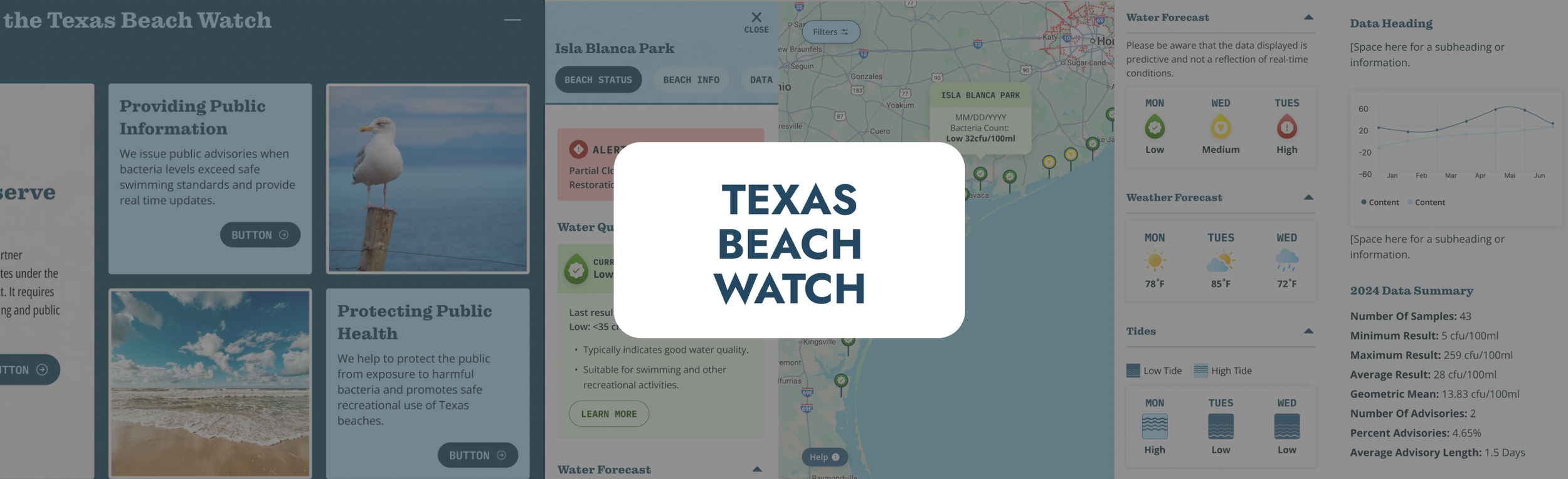
367 Miles of coastline, 20 Million Visitors: Unlocking Public Access to Texas Coastal Data
Rearchitected critical state water quality infrastructure to decentralize map data, improving public safety notifications and streamlining media inquiries
We transformed the Texas GLO's inaccessible water quality map into a scalable architecture of individual, indexable beach pages, ensuring life-saving public health alerts could be easily tracked, shared by the media, and accessed by the public.
The site is a primary infrastructure for public safety notifications, ensuring citizens are warned about dangerous water conditions. Critical public health data was trapped inside mapping software. Without individual, indexable web pages for specific beaches, the organization could not track user analytics, and the media/public struggled to access or share specific water quality alerts.
Stakeholder landscape: Balancing the needs of state government officials, environmental researchers, the media, and everyday beachgoers.
Translated dense, monolithic geographic data requirements into an actionable Information Architecture, breaking down map data into individual, indexable beach pages.
Findings that surprised stakeholders: Identified that trapping public health data exclusively within mapping software prevented media and citizens from sharing specific beach alerts directly.
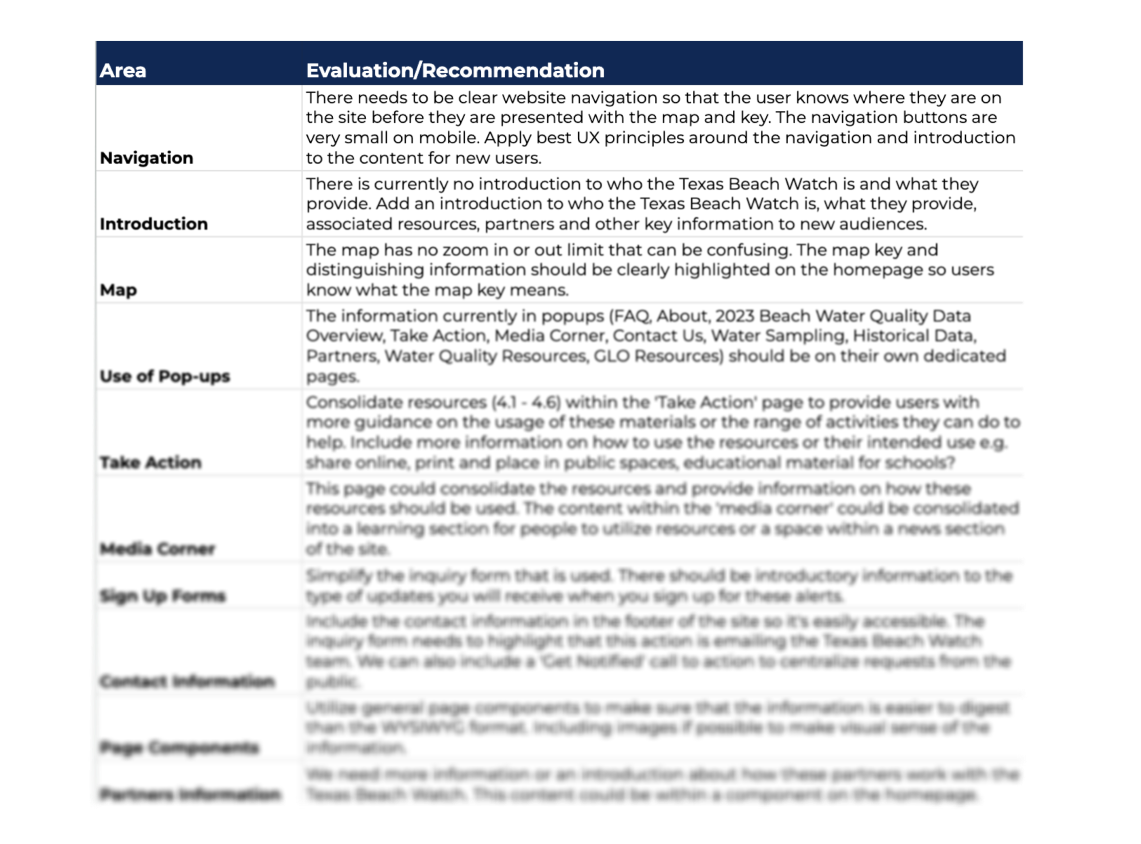
Content Audit
Rearchitected a state public health tool from a monolithic, map-only interface into a decentralized content system featuring distinct, indexable web pages for individual beaches.
Structured the architecture to solve a critical business and safety problem: allowing media and citizens to share specific, direct links to water quality alerts, which was previously impossible when data was trapped in a map widget.

Sitemapping
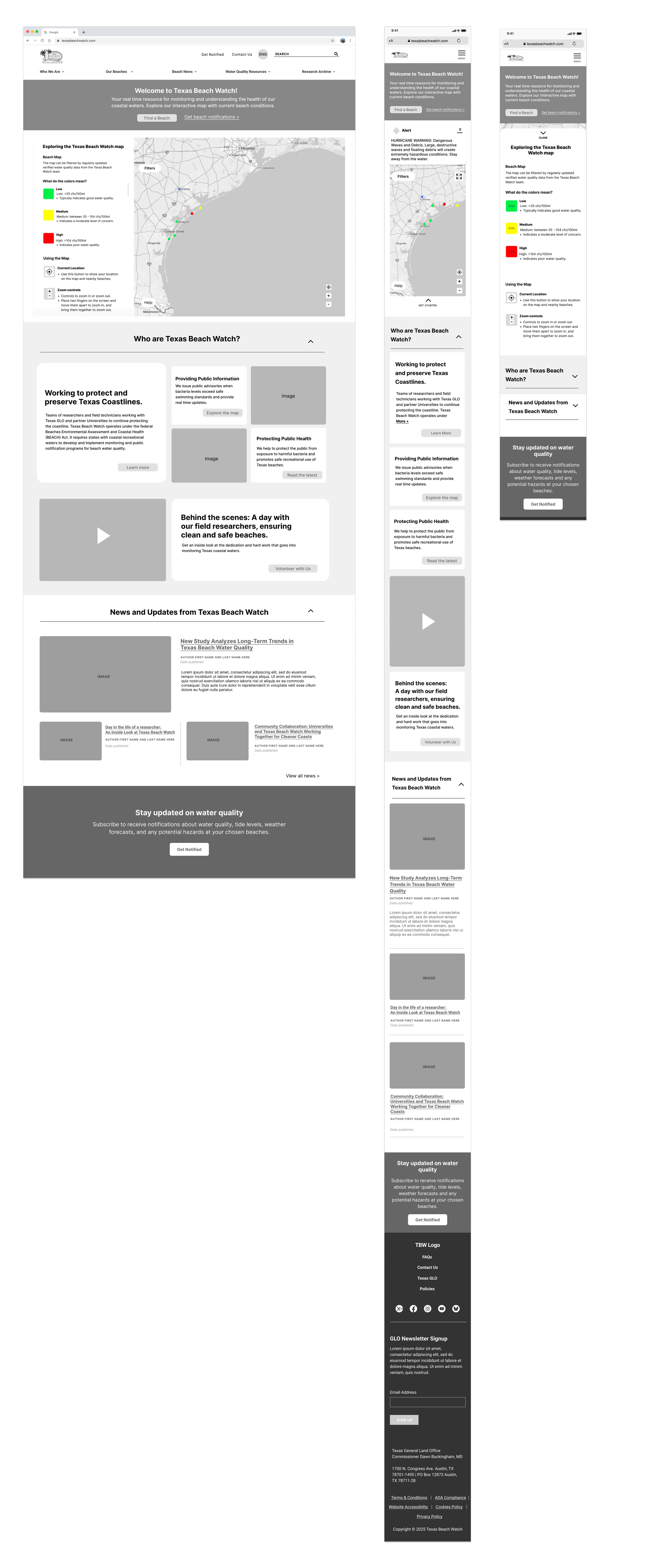
Initial Wireframes
Key Decisions: I designed the map to maintain consistency across navigation and exploration for the general public, researchers, the media and the Texas Beach Watch team so that there is not confusion for users when accessing key public health information.
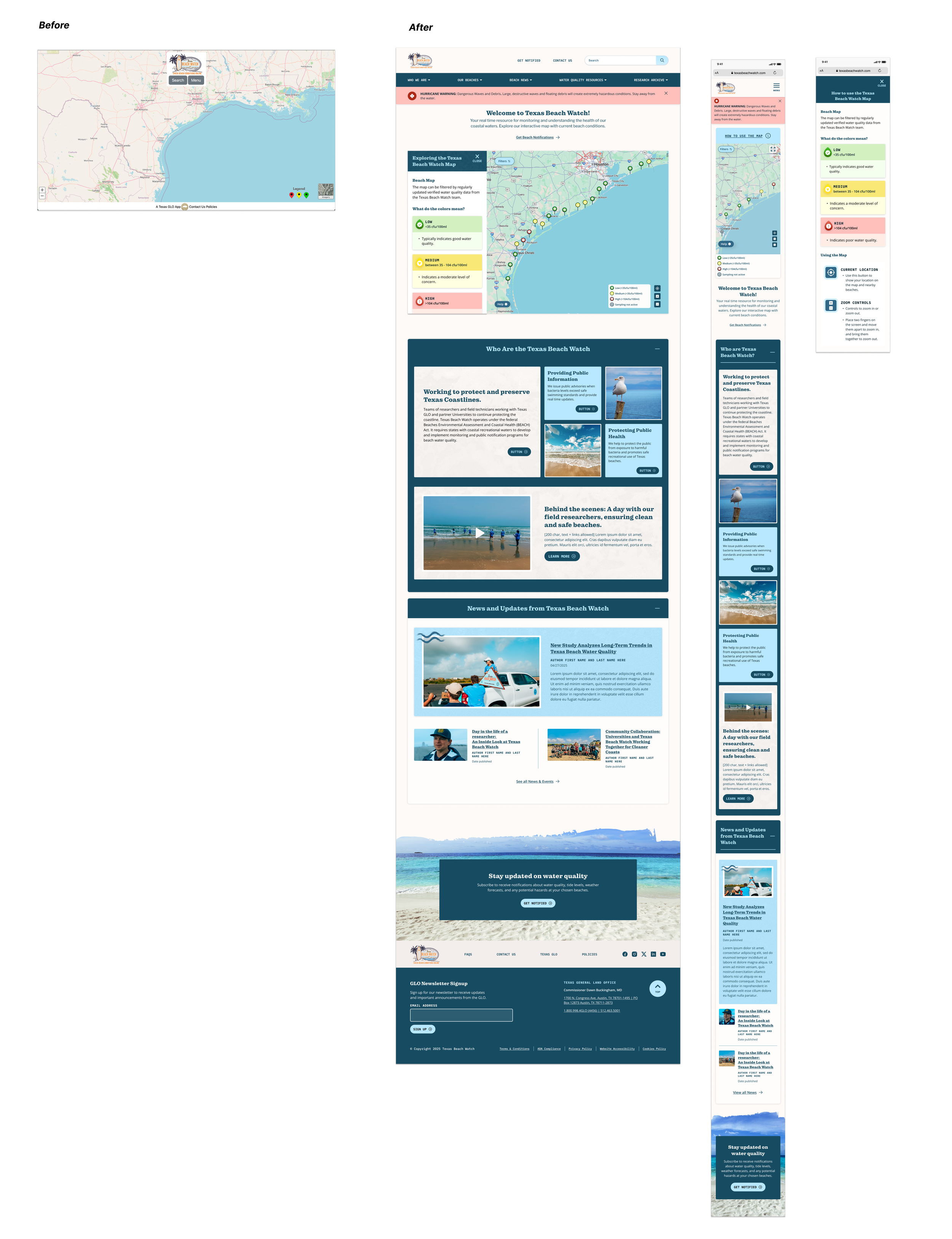
Homepage Wireframes
- What would not have happened without me — The decentralization of monolithic public health data. Without my UX intervention, critical water quality alerts would have remained trapped inside a singular map widget, preventing the media and public from linking to specific beach statuses.
- I actively reviewed and evaluated the existing Texas GLO development components to judge their viability for integration into the new Texas Beach Watch UX architecture.
- Domain expertise applied — Public health navigation, environmental data visualization, and state government web architecture.
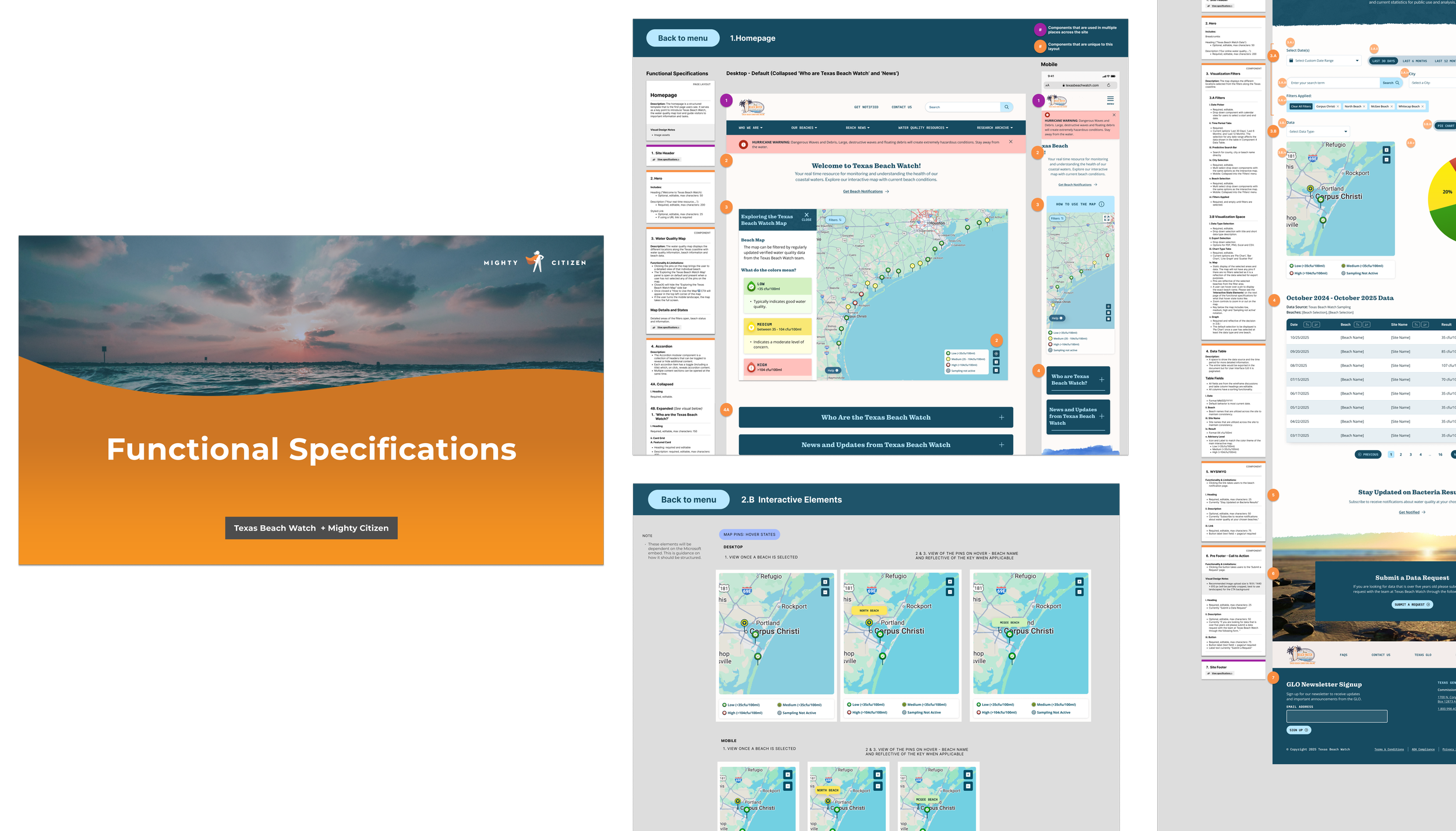
Providing Functional Specifications for the client to understand the design details
- Downstream reach — Rearchitected a vital public health and safety tool operated by the Texas General Land Office (GLO), directly impacting how citizens and the media receive life-saving water quality alerts along the Texas coast.
- Business outcome — Decentralized critical health data out of a singular mapping software and into individual, indexable beach web pages. This structural pivot aims to increase site traffic, boosted sign-ups for beach notification emails, and streamline media inquiries directly to the Texas Beach Watch team.
Delivered such rigorous Information Architecture and Functional Specifications that the Texas General Land Office (GLO) utilized these exact UX blueprints to develop and build the site internally.
Presented the new Sitemap and Wireframes to the Texas Beach Watch environmental and public safety stakeholders.
Because we were not the implementation agency on this project, I lacked a firm understanding of the client's internal development capabilities. In the future, when acting strictly as a UX strategy partner for an external dev team, I would enforce a technical capability audit of their team to ensure our functional specs match their build maturity.
What this changed in my practice
Operating without the usual guardrails of internal implementation allowed the UX team to "dream bigger". This taught me the value of unconstrained ideation designing the ideal public health architecture first, and then scaling it back to fit the government budgets.
Thank you for looking through my work!
More projects are right here >>